








Danish Red Cow — buy or sell



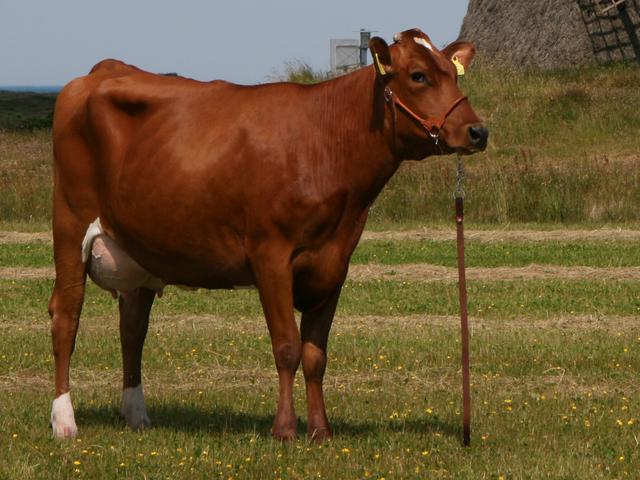
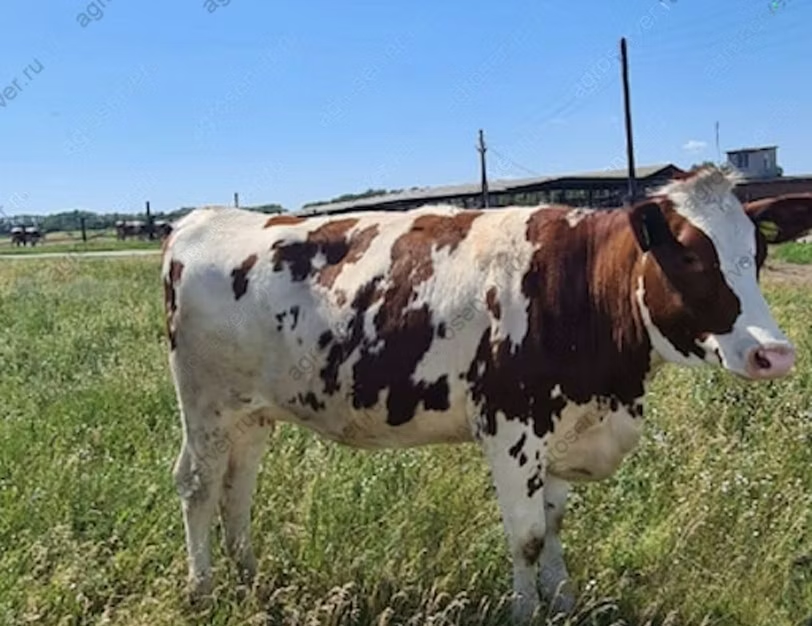
Breed history: The Red Danish cow is a breed whose significance for milk production in Northern Europe is great. The history of the Red Danish breed is closely linked to the local breeds of Denmark. The breed was formed in the late 18th century on the islands off the coast of Denmark. It was based on local red breeds, improved by the infusion of blood from Angeln cattle from the regions of Angeln and Schleswig. In the 1970s, blood from the Brown Swiss breed was added to the gene pool. In the early 1960s, Red Danish cows made up 61% of the cattle population in Denmark, but by the early 1980s, their share had decreased to just over 20% due to the spread of more productive Holstein Friesians. Despite this decline, the breed has survived and continues to be bred, with over 42,599 purebred cows in Denmark. Red Danish cows have also been used to improve other local breeds in various countries, including Lithuania, Estonia, Belarus, Poland, and Russia. Exterior: Red Danish cows are medium-sized animals with a strong build. The weight of the cows ranges from 550 to 660 kg, while bulls can reach weights of 1000 to 1300 kg. The height at the withers of these cows usually does not exceed 130 cm. The primary color of these animals is pure red, although individuals with red and white spots are sometimes found. Bulls are generally slightly darker in color. All individuals are horned regardless of sex. The body structure of these cows is characterized by a deep and wide round-shaped ribcage. The musculature is well developed. The limbs of the Red Danish cows are short but strong, which helps them move well. The udder of the cows is large, with a rounded or bowl-shaped form, and it is also well developed and adapted for milking. Housing conditions: Red Danish cows have good endurance and can adapt to different climatic conditions. They can withstand both cold and heat, making them suitable for various regions. However, it is important to meet several conditions for their normal maintenance. In winter, these animals need to be provided with a comfortable temperature in a dry and clean environment. In summer, cows should have access to shade and water to avoid overheating in the heat. It is also important to create a calm atmosphere, especially for cows during pregnancy. They need to be provided with a balanced diet and guaranteed comfortable conditions for normal development and growth.
Log in to learn more
Sign inWhat to feed
Diet: The nutrition of the Red Danish cow includes hay, silage, various concentrates, as well as mineral supplements and vitamins. When the cow is pregnant or in the lactation period, her nutrient requirements increase, and the diet needs to be adjusted to meet these demands. Calves receive milk from their mother in the first months of life, and then gradually begin to transition to solid feed.
Physical parameters
Male Weight: 120–140 kg
Female weight: 115–130 kg
Male height: 1000–1300 cm
Female height: 550–660 cm
Habitat Range
Belarus
Czechia
Denmark
Estonia
Germany
Latvia
Lithuania
Poland
Russia
Sweden
Switzerland
United Kingdom
Frequently Asked Questions
How much does Danish Red Cow weigh?
Adult animal: male — 120–140 kg, female — 115–130 kg.
How tall is Danish Red Cow?
Height at the withers: male — 1000–1300 cm, female — 550–660 cm.
Where does Danish Red Cow come from?
Country of origin — Denmark.
Where is Danish Red Cow bred?
The breed is common in: Belarus, Czechia, Denmark, Estonia, Germany, Latvia, Lithuania, Poland.
What should Danish Red Cow be fed?
Diet: The nutrition of the Red Danish cow includes hay, silage, various concentrates, as well as mineral supplements and vitamins.
Q&A
No questions yet. Ask the first!
Log in to ask a question
Listings in your area